

Building a self-storage facility isn't just about putting up a few sheds. It’s about turning an empty piece of land into a high-return property asset through smart design, navigating regulations, and using efficient building methods. The real goal? Maximising your net lettable area to create a profitable, in-demand facility that generates steady income. Success really boils down to having a solid plan from the moment you start looking for a site to the final fit-out.
Your Roadmap to a Profitable Self Storage Facility
Think of building a self-storage facility like putting together a complex puzzle. Every single piece—from the land you choose to the type of doors you install—has to fit perfectly to create a profitable picture. It’s a journey that takes an idea on paper and transforms it into a tangible asset. For investors and developers, understanding this roadmap is the first step towards a successful venture in what has proven to be a very resilient market.
This guide will walk you through the entire process, giving you a clear path from the initial concept to a fully operational facility. We'll dive into how modern construction techniques are used to create sophisticated, multi-storey assets designed for maximum return.
Core Stages of Development
You can break the whole journey down into three fundamental phases. Each one comes with its own critical tasks and decisions. Get one stage right, and you're building the next on a solid foundation, which helps prevent costly mistakes and delays further down the line. It's a logical flow: find the right land, design an efficient layout, and then, finally, construct the building itself.
This visual flow shows the core steps in self storage building construction.
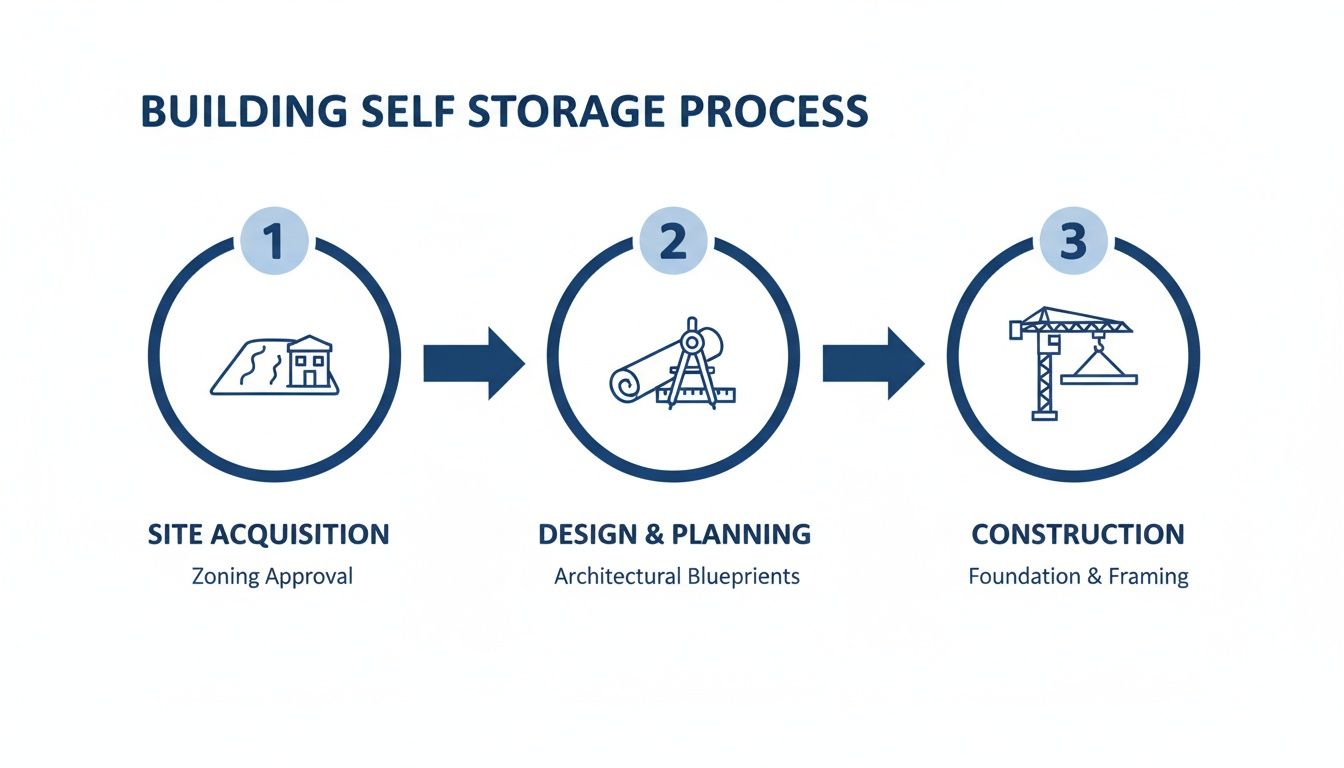
As you can see, each stage—Site, Design, and Build—flows logically into the next, forming the backbone of the entire project timeline.
From Blueprint to Business
Beyond the bricks and mortar, a few other elements are absolutely vital for turning that new building into a thriving business. These wrap around the main construction phases and are essential for long-term success. For instance, exploring efficient methods like prefabricated building solutions can make a massive difference to your timelines and overall profitability right from the start.
Success in this game really hangs on a few key areas:
- Strategic Design: The layout has to be engineered to squeeze out every last square foot of net lettable area. This means creating a unit mix that actually meets local demand and using clever solutions like mezzanines to add more rentable space without making the building's footprint any bigger.
- Regulatory Compliance: Getting to grips with UK building codes and fire safety standards isn't just a box-ticking exercise. It's a crucial step in protecting your investment and keeping your customers safe.
- Smart Financing: Understanding the costs and securing the right funding is foundational. Innovative financing models can help minimise the upfront capital you need, allowing the facility’s income to help cover its own development costs. You can learn more about the financial side by exploring our guide on self storage as a business.
By following this comprehensive approach, you can transform a simple construction project into a high-performing asset that pays dividends for years to come.
Finding the Right Ground for Your Investment
The success of any self-storage project hinges on one thing long before the first shovel hits the dirt: the plot of land you choose. It's the absolute bedrock of your investment, and frankly, getting this decision right is non-negotiable.
Think of it like planting a tree. You can have the best seed in the world, but it’ll never flourish in the wrong soil. The right location doesn’t just help; it sets the stage for high occupancy rates and long-term profitability from day one. This initial phase, often called due diligence, is about more than just finding an empty lot. It’s a deep dive into the area, its people, and its potential for growth. A site that looks perfect on paper can quickly become a financial black hole if it's hidden away or a nightmare for customers to get to.
Pinpointing the Perfect Location
Visibility and accessibility are the twin pillars of a winning self-storage location. A facility tucked away on a forgotten industrial estate is going to struggle, no question. But one on a main arterial road? That’s free, constant advertising. You want daily commuters and local residents driving past your brand every single day, making you the first name they think of when they need to store their stuff.
When you're out scouting for land, keep these essentials front and centre:
- High Traffic Counts: A spot on a busy road or near a major junction puts your facility in front of thousands of potential customers daily. It's that simple.
- Easy Access: Can people get in and out without a headache? Awkward turns, confusing one-way systems, or a poorly marked entrance will put people off before they even step inside.
- Favourable Demographics: Look for areas dense with renters, new housing developments, or a growing population. Life transitions—moving house, downsizing, starting a family—are what drive the demand for self-storage.
For instance, a plot of land near a new housing estate is a goldmine. New homeowners are almost always in a state of chaos during the move and need a place to stash their belongings temporarily. Likewise, areas packed with flats and apartments, where space is a luxury, create a constant, reliable demand for storage.
Navigating UK Planning and Regulations
Once you’ve zeroed in on a promising site, the real homework begins. You need to be certain it's legally viable for a self-storage development. This is where you wade into the complexities of UK zoning laws and planning permissions—a process that can take anywhere from two to six months, and sometimes a whole lot longer.
A thorough due diligence process at this stage isn't just a box-ticking exercise; it's a critical risk-mitigation strategy. Overlooking a zoning restriction or an environmental issue can stop a project dead in its tracks, costing you a fortune in both time and capital.
Your investigation needs to cover several key areas to ensure a smooth journey through the approvals process.
Your Due Diligence Checklist:
- Zoning Verification: First thing’s first: confirm with the local council that the land is zoned for commercial or industrial use that’s compatible with self-storage. A plot designated purely for residential or agricultural use means a long, uncertain, and expensive rezoning application.
- Planning Permission: Get a handle on what the local authority requires for a new commercial build. This will involve submitting detailed architectural drawings, traffic impact assessments, and sometimes, community consultations.
- Environmental Checks: An environmental survey is absolutely crucial. It’ll flag potential headaches like soil contamination from previous industrial use, flood risks, or the presence of protected wildlife. Any of these can add unforeseen costs and serious delays to your project.
Preparing the Site for Construction
With your permissions secured, the focus shifts from paperwork to physical groundwork. This phase is all about transforming that raw piece of land into a construction-ready site, laying the foundation for the entire build. Site preparation typically takes one to two months and involves a series of coordinated tasks.
Key jobs include clearing any existing vegetation or debris, grading the land to ensure proper drainage, and excavating for the building's foundations. Just as importantly, this stage involves liaising with utility providers to bring essential services like water, electricity, and data lines right to the site boundary.
Get the site prep right, and when the construction team arrives, they can hit the ground running. It’s the best way to keep your self-storage building construction timeline on track from day one.
Designing for Maximum Profitability
Once you’ve secured the right piece of land, the game shifts from location to layout. This is where the real science of self storage building construction kicks in, and where you start engineering profitability right into the blueprint. An intelligent design isn’t just a nice-to-have; it's the single most critical factor driving your return on investment. It’s all about making every square metre count.
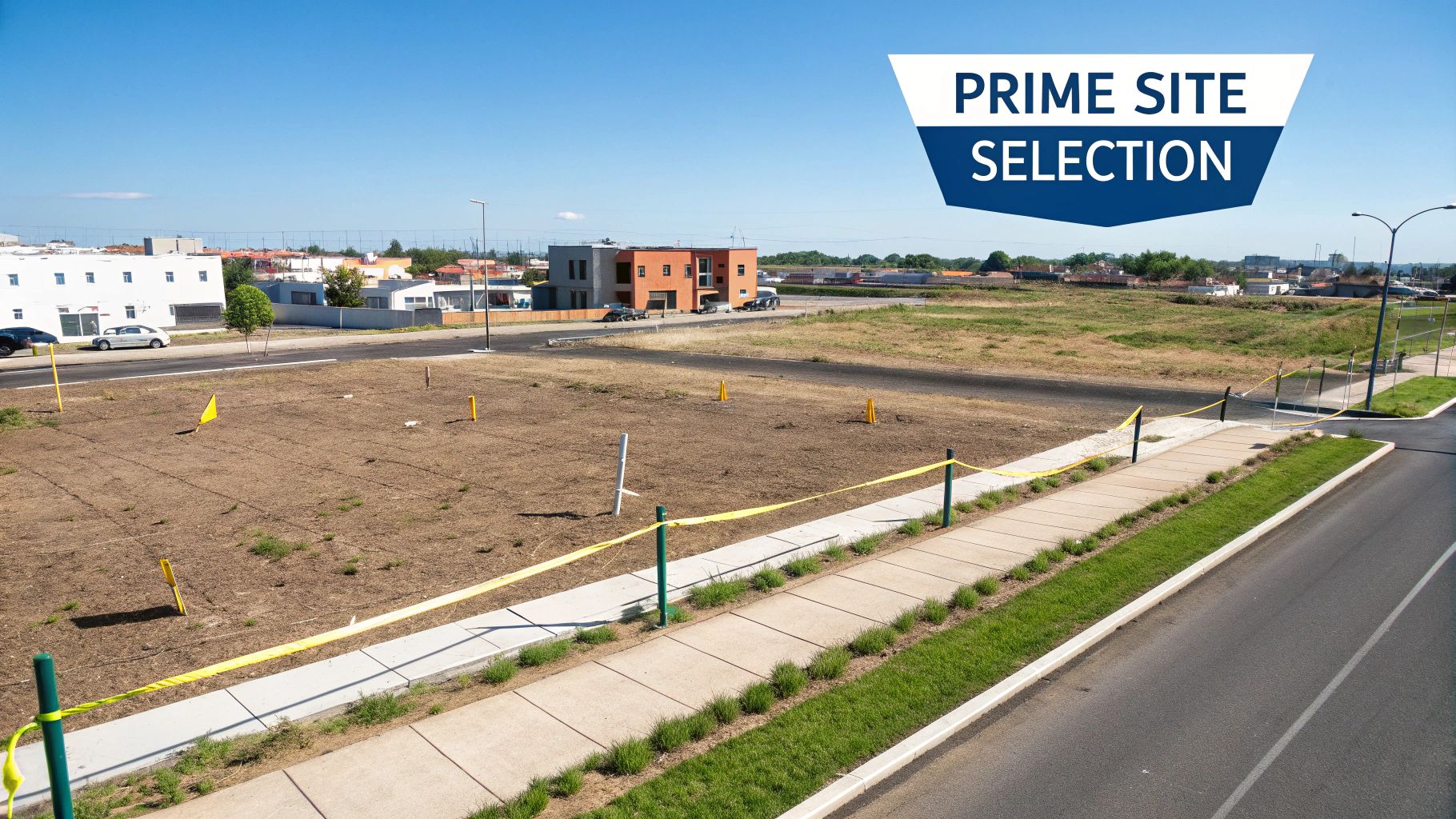
Great design isn't about looking pretty—it's about building a high-performance financial asset. It’s a careful balancing act, weighing up customer needs against operational efficiency to squeeze the most out of your Net Lettable Area (NLA), which is the total space you can actually rent out.
The UK self-storage industry is booming, with total space growing by 7.2% in the last year alone to hit a massive 64.3 million square feet. This growth is being driven by strong demand from both homeowners and small businesses, making an optimised facility more important than ever. For a deeper dive, check out the 2025 UK Self Storage Industry Report from Janus Europe.
Crafting the Perfect Unit Mix
The absolute cornerstone of a profitable facility is its unit mix—the specific variety and number of different-sized storage units you offer. Get this right, and you can cater to a huge range of customers, from a student needing a small locker for a few months to a family storing the contents of their entire house.
A poorly planned unit mix is a recipe for disaster. You’ll end up with unpopular units sitting empty while you have long waiting lists for the sizes people actually want, which is a direct hit to your bottom line. The goal is simple: match your unit inventory to the local demographic. An area full of flats and young professionals? You'll likely see high demand for smaller units (25-50 sq ft). A suburban area with larger family homes? You'll need more 100-150 sq ft units.
Running a thorough market analysis isn't optional; it's essential. See what your competitors are offering and, more importantly, what they aren't. This data-driven approach ensures your facility meets real, existing demand from the day you open your doors.
Doubling Your Space with Mezzanine Floors
One of the most powerful tools in the self storage building construction playbook is the mezzanine floor. Think of it as a way to clone your lettable space without actually increasing your building’s footprint. By installing a second (or even third) level inside your building’s existing shell, you can effectively double your rentable area. Simple as that.
This kind of vertical expansion is a total game-changer for your ROI. Sure, the initial investment for a mezzanine is higher than a single-storey fit-out, but the return is massively greater because you're generating far more rental income from the exact same plot of land.
A well-integrated mezzanine system can turn a standard warehouse into a multi-level revenue engine. It is the single most effective strategy for maximising the profit potential of a site with a limited footprint but generous ceiling height.
These structures aren't just an afterthought; they have to be planned from the very beginning. If you're considering a mezzanine, here are a few key things to think about:
- Structural Integrity: The building's foundation and frame must be strong enough to handle all that extra weight.
- Accessibility: Lifts and well-placed staircases are non-negotiable for customer convenience and safety.
- Fire Safety: Mezzanines introduce new fire-rating requirements, like protected escape routes and fire-resistant materials, which are absolutely critical for compliance.
Enhancing Flow with Corridors and Lockers
Finally, let's talk about the internal layout. The network of corridors and the placement of smaller units are vital for both the customer experience and your operational efficiency. Wide, well-lit corridors make a facility feel safe and easy to navigate, which encourages people to stick around longer. A poorly designed layout that feels cramped and confusing will send potential customers running to your competitors.
Adding smaller locker systems is another smart design move. They’re perfect for students, sales reps, or anyone who just needs to store a few boxes. These lockers can fill up awkward spaces that might otherwise go to waste, and they cater to a whole segment of the market with smaller storage needs and budgets, giving you another valuable stream of income.
Each design decision, from the unit mix to the corridor width, directly impacts your facility's financial success. Let's break down how these elements connect to your return on investment.
Key Design Elements and Their Impact on ROI
This table illustrates how specific design choices in self-storage construction directly influence operational efficiency and financial returns.
| Design Element | Description | Impact on ROI |
|---|---|---|
| Optimal Unit Mix | A data-driven selection of unit sizes that matches local demographic demand. | Maximises occupancy rates and reduces vacancies, directly increasing rental income. |
| Mezzanine Floors | Adding one or more levels within the building's existing height to increase lettable area. | Dramatically increases Net Lettable Area and revenue potential from the same land plot. |
| Efficient Corridor Layout | Wide, well-lit, and easy-to-navigate corridors that enhance customer experience. | Improves customer retention, encourages longer tenancy periods, and supports premium pricing. |
| Integrated Locker Systems | Small, secure lockers placed in otherwise unused spaces to cater to micro-storage needs. | Creates an additional revenue stream, improves space utilisation, and attracts new customer segments. |
| Strategic Lift Placement | Lifts and stairs positioned for easy access to upper floors, especially mezzanines. | Enhances customer convenience and makes upper-level units more desirable, maintaining their rental value. |
By thoughtfully combining an optimal unit mix, vertical expansion with mezzanines, and an efficient internal layout, you can turn a simple building into a highly profitable self-storage facility. To get a better sense of how all these pieces fit together, you might want to read our guide on how to design a self storage facility for maximum efficiency.
Getting to Grips with Building and Fire Safety Rules
Diving into the regulatory side of self storage building construction can feel a bit like navigating a maze, but it’s a non-negotiable part of the process. The best way to look at it? Compliance isn't a costly hurdle; it's the ultimate insurance policy for your investment. It’s the framework that protects your asset, your customers’ belongings, and your business's reputation.
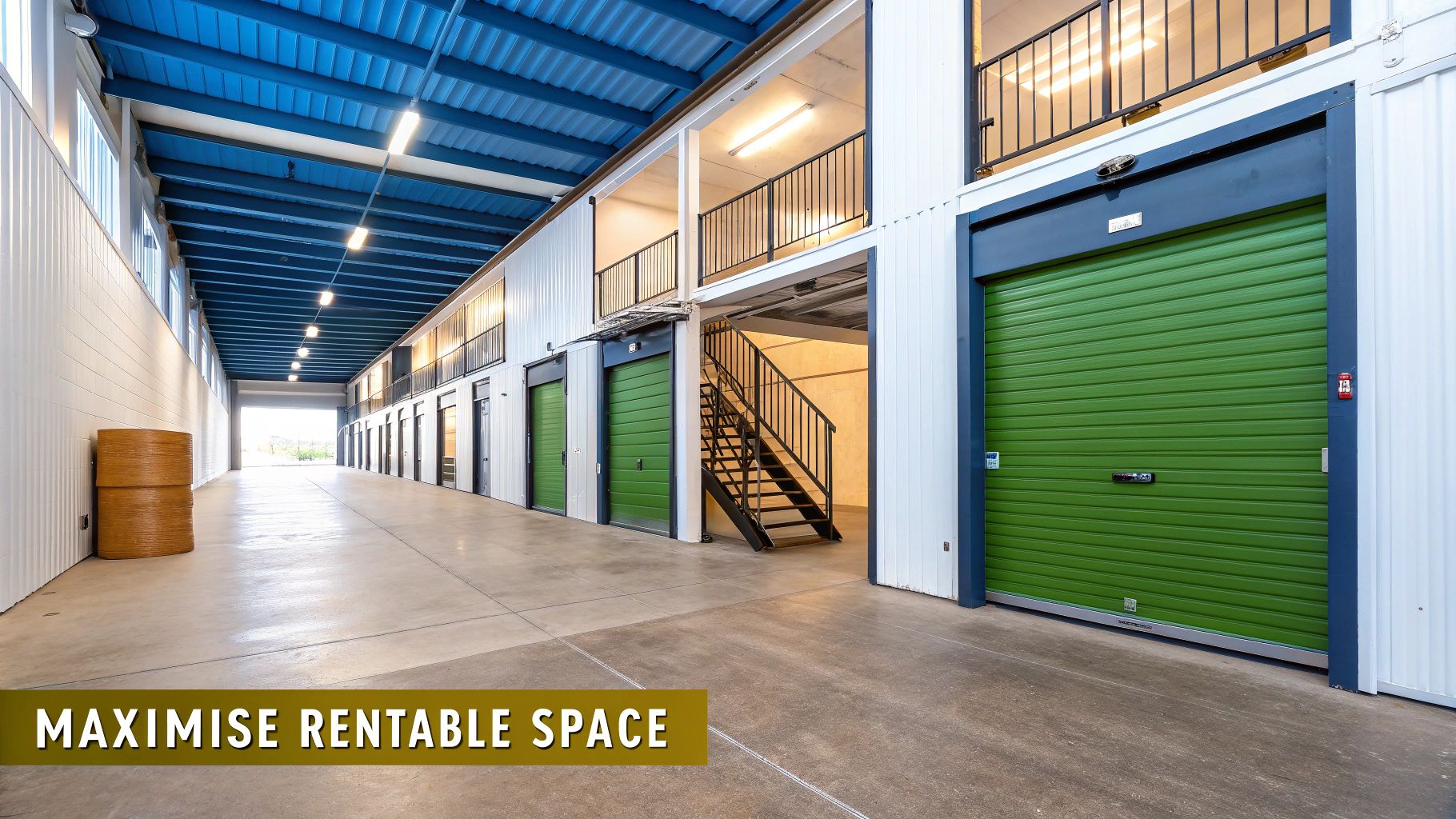
Getting these details right from day one is absolutely crucial. Trying to cut corners with regulations doesn’t just create safety risks; it’s an open invitation for expensive retrofits, project delays, and potentially ruinous legal headaches down the road. A proactive approach means your facility will be safe, secure, and legally sound from the moment you open the doors.
The Core UK Building Regulations You Need to Know
In the UK, every construction project has to follow a set of standards known as the Building Regulations. These rules cover everything from the structural integrity of the building and its energy efficiency to accessibility and, most importantly, fire safety. For a self-storage facility, the fire safety part is especially tough. You're dealing with a huge volume of stored goods, and you have no idea what’s in those units—some of it could be highly flammable.
Your project has to meet the requirements laid out in the official Approved Documents, particularly Approved Document B (Fire Safety). This is the rulebook that dictates the critical elements of your build, ensuring the facility is designed to stop a fire from spreading and allow everyone to get out safely. You can get more detail on how these rules play out on our overview of building regulations.
Compliance isn't just about ticking boxes to meet minimum standards. It’s about building a facility that gives your customers total confidence. A safe, properly regulated environment is a powerful selling point that signals you’re a professional and trustworthy operator.
Nailing these standards is a team effort. It involves your architects, structural engineers, and specialist installers who live and breathe the unique demands of self-storage. Putting together a solid Construction Safety Management Plan is the foundation of a safe and compliant project, as it clearly outlines every step you'll take to manage risks on site.
Key Fire Safety Requirements
Fire safety in a self-storage facility really boils down to three core principles: containment, detection, and escape. Every single design choice you make has to support these principles, from the materials you choose to the layout of your corridors.
Here are the non-negotiable elements you’ll need to build into your design:
- Fire-Rated Partitioning: Your internal walls and partitioning systems must have a specific fire-resistance rating, typically 60 minutes. This means they’re engineered to contain a fire within one section for at least an hour. That precious time prevents a fire from tearing through the building and gives emergency services a fighting chance to respond.
- Sprinkler Systems: For any larger or multi-storey facility, an automatic sprinkler system is almost always mandatory. These systems are designed to suppress a fire before it can escalate, drastically cutting down the potential damage to both your building and the contents of your customers' units.
- Clear Escape Routes: Corridors and emergency exits must be wide, clearly marked with signage, and kept completely clear of obstructions. The layout has to guarantee that anyone, no matter where they are in the building, has a simple and protected route to safety during an emergency.
- Alarm and Detection Systems: A robust network of smoke detectors and fire alarms is your first line of defence. It’s essential for giving an early warning. These systems must be connected to a central panel and, in many cases, wired directly to the local fire brigade.
By weaving these safety measures into your plans from the very beginning, you create a facility that's not just profitable but fundamentally safe for everyone who sets foot inside. That foresight saves you from eye-watering bills for last-minute changes during construction and ensures you’ll sail through the final inspection and commissioning process.
With the plans signed off and all the necessary permissions secured, your self-storage project is ready to leave the drawing board and become a physical reality. This is where the steel meets the concrete – the self storage building construction phase, where an empty plot of land is transformed into a functional, income-producing asset.
Getting from a bare foundation to a finished facility is a bit like conducting an orchestra. Timing, quality control, and coordination are everything.
Choosing Your Building's Skeleton: Steel vs. Traditional
One of the first big calls you'll make is on the building's core structure. For years, the default choice was traditional brick and blockwork. It's undeniably sturdy, but it's also slow and demands a lot of hands-on labour, which can drag out your project timeline and inflate costs.
These days, the industry has almost universally shifted to modern steel-framed structures, and for good reason. These buildings are precision-engineered in a factory and delivered to your site ready to be bolted together. The speed is a game-changer. A steel shell can go up in a fraction of the time it takes for a traditional build, meaning you can get the internal fit-out started much sooner and open your doors to paying customers faster.
The Turnkey Approach: One Partner, No Headaches
Once the external shell is weather-tight, the action moves inside. This is the stage where your carefully planned unit mix, corridors, and mezzanine floors actually take shape. The installation is a systematic process, making sure every single component, from the partition walls down to the last door latch, is fitted perfectly.
A smooth fit-out is absolutely critical for staying on schedule. Any hold-ups here have a direct knock-on effect, pushing back your grand opening and delaying that first wave of rental income.
The construction and fit-out isn't just about putting pieces together; it's about seamless integration. When you work with a single-source supplier who manages everything from the steel frame to the final locker, you ensure every element is designed to work together. This completely sidesteps the coordination nightmares and finger-pointing that can happen when you're juggling multiple contractors.
This all-in-one method is what the industry calls a turnkey solution. It means one expert partner takes full responsibility for the entire build, giving you a single point of contact and total accountability. It's an incredibly effective model for maintaining quality, sticking to the budget, and getting the project delivered on time without any costly drama.
Step-by-Step: Assembling the Interior
The internal fit-out follows a clear, logical sequence. Each stage builds on the one before it, creating a secure and user-friendly environment for your customers. Think of it like assembling a high-performance engine – every part has to be installed in the correct order for the whole thing to work properly.
Here's how a typical internal installation unfolds:
- Mezzanine Floor Goes In: If your design includes extra levels (and it should!), this is one of the first big jobs inside. The steel framework for the mezzanine is erected, then the decking is laid on top. Just like that, you've created a brand-new floor and potentially doubled your rentable area.
- Partitions Go Up: Next, the grid system of corridors and individual unit walls is installed. These partitioning systems are usually made from tough, coated steel panels that are quick to assemble and provide the security and fire resistance needed between units.
- Doors Are Hung: With the unit shapes defined, the roll-up or swing doors are fitted. This step demands real precision to make sure every door runs smoothly and locks securely. After all, this is the main thing your customers will interact with.
- Finishing Touches: The final sprint involves installing lighting, security systems like CCTV, and essential fire safety gear such as sprinklers and alarms. The flooring is finished, signs go up, and the entire facility gets a thorough clean and final inspection.
By having a specialist provider manage this entire process, each stage flows smoothly into the next. You avoid the classic construction problem of one trade team standing around waiting for another to finish—a common source of expensive delays. The end result is a high-quality facility, delivered on schedule and ready to welcome its first tenants.
Smart Financing Strategies for Your Project
A solid blueprint and an ideal location are essential, but the engine that truly drives your self storage building construction project forward is smart financing. Getting your head around the financial landscape is just as important as knowing the building regulations. It’s about more than just securing a loan; it’s about structuring a financial plan that minimises risk and gets you to profitability faster.
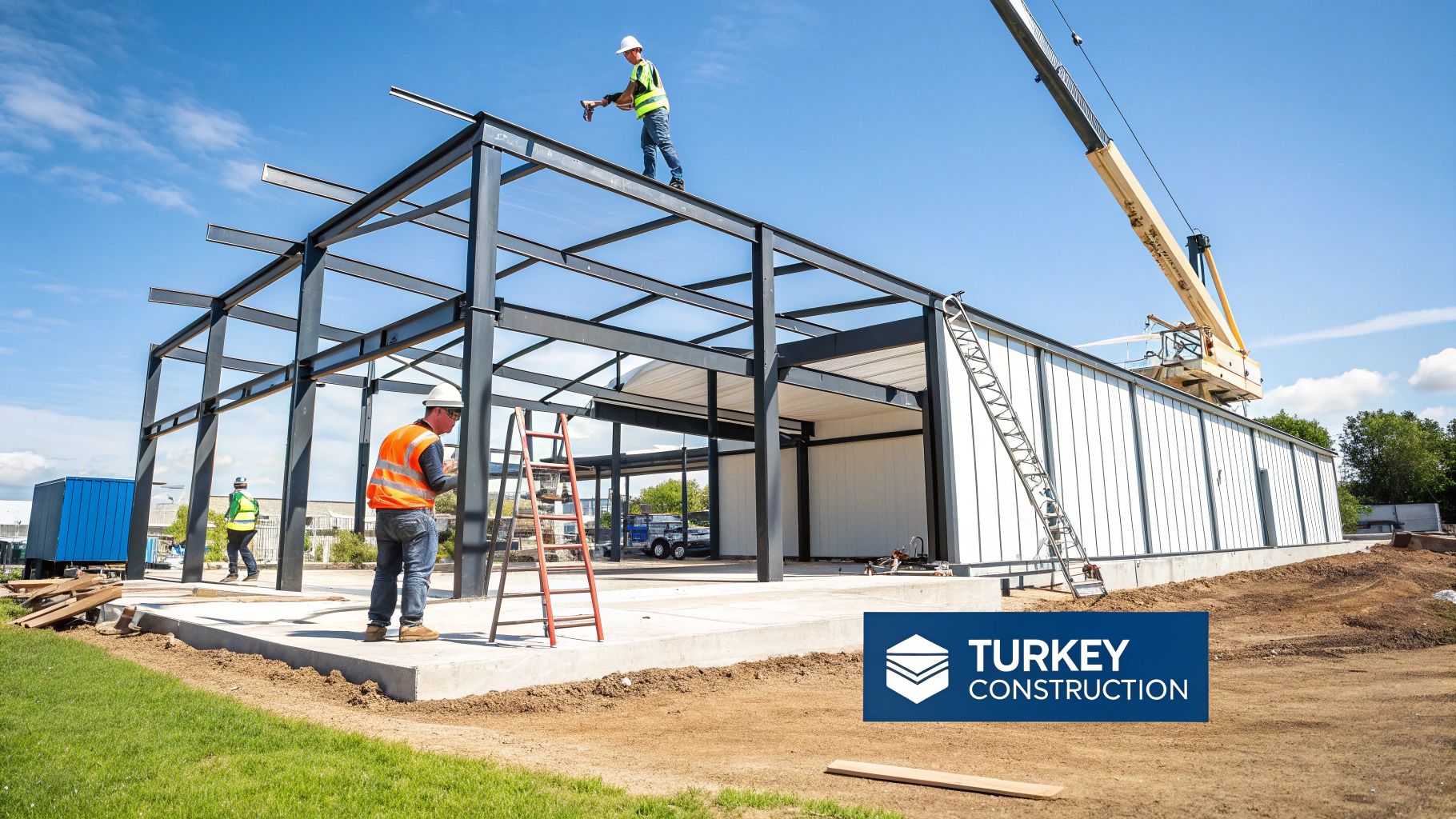
The old-school approach of taking out one huge loan to cover everything from buying the land to the final fit-out can create immense pressure. This model often demands a massive upfront investment long before a single unit is ever rented out. Luckily, modern financing offers a much more flexible and sustainable path for developers.
Breaking Down the Major Project Costs
Before you even think about funding options, you need a realistic picture of your budget. A self-storage project budget isn’t just one big number; it's a collection of distinct cost centres, and each one needs careful thought. Get your sums wrong in one area, and it can have a serious knock-on effect on the whole project's viability.
Your main cost drivers will almost always include:
- Land Acquisition: Often the biggest single expense, dictated entirely by location and size.
- Professional Fees: Your budget for architects, surveyors, engineers, and planning consultants.
- Site Preparation: All the groundworks, utility connections, and drainage systems.
- Building Shell Construction: The cost of the main structure itself, whether it's a steel frame or a more traditional build.
- Internal Fit-Out: All the partitioning, doors, mezzanine floors, and locker systems.
- Contingency Fund: A critical buffer, usually 5-10% of the total budget, to handle any unexpected surprises.
Understanding these pieces allows you to walk into a lender's office with a clear, credible plan that shows you’ve done your homework.
Innovative Financing That Works for You
The whole point of modern financing is to line up your outgoing costs with your future income. Instead of one massive capital outlay at the start, structured finance packages let you phase your investment. This eases the initial financial burden and lets the facility start paying for itself much, much sooner.
This approach is a total game-changer for managing cash flow. It allows the new facility’s rental income to start servicing the debt used for its construction, creating a self-sustaining and lower-risk investment.
By separating the financing for the fit-out from the main construction loan, developers can preserve capital and accelerate their opening timeline. This strategy enables the facility to start generating revenue, which then services the fit-out loan, making the entire project more financially sustainable from day one.
This model is especially powerful for the internal fit-out, which can be financed completely separately from the main building works. Here’s how it works: your specialist fit-out partner provides a dedicated finance package that covers the cost of all partitions, doors, and mezzanines. This means you don't have to find a huge lump sum of cash right at the beginning.
Instead, you can get your facility built and operational, start signing up customers, and use that early rental income to make manageable payments on the fit-out. It’s a powerful tool that makes high-quality self storage building construction more accessible, whether you’re a seasoned developer or a first-time investor.
Your Self-Storage Construction Questions Answered
If you’re thinking about developing a self-storage site, you’ve probably got a lot of questions running through your mind. It’s a big investment, and getting clear answers from the start is the best way to build confidence and set your project up for success. Here are a few of the most common queries we hear from developers and investors.
How Long Does It Take to Build a Self-Storage Facility?
The timeline really depends on the scale of your project. For a straightforward, smaller single-storey build, you could be looking at a completion time of 6 to 9 months.
If you're planning something more ambitious, like a large, multi-storey facility with mezzanines and all the trimmings, it's more realistic to budget for 12 to 18 months from the first spade in the ground to opening day.
That timeframe covers everything:
- Initial site planning and wrestling with permits.
- Ground preparation and laying the foundations.
- Constructing the main building shell.
- The complete internal fit-out and final commissioning.
The best way to keep this schedule tight is to work with a turnkey provider. Having one team manage the entire process avoids those frustrating (and costly) delays that can happen when handing off between different contractors.
What’s the Single Biggest Factor for a Profitable Facility?
A great location is obviously a huge plus for getting customers through the door. But the biggest factor you can actually control is design efficiency. The name of the game is maximising your Net Lettable Area (NLA).
It's not just about putting up a building; it's about engineering a profit machine. The real money is made in a design that squeezes every last square foot of rentable space out of your plot. A smart unit mix, efficient corridors, and building upwards with mezzanines are what directly drive your ROI.
This is exactly why getting a design specialist involved right at the beginning is so crucial. Their expertise turns a simple building plan into a high-performance financial asset.
Can I Convert an Existing Building like a Warehouse?
Absolutely. Converting existing buildings—think old warehouses or big, empty retail units—is a very popular and often cost-effective route into the market. These structures usually have the high ceilings and wide-open floor plans that are perfect for installing storage partitions and mezzanine levels.
But don't mistake "cost-effective" for "easy." A conversion project still requires meticulous planning. The building has to be brought up to code with all current building regulations, with a sharp focus on modern fire safety, ventilation, and accessibility standards. A specialist firm can properly assess a building’s suitability and design a bespoke conversion plan that unlocks its hidden potential.
Ready to turn your vision into a high-return self-storage facility? The expert team at Partitioning Services Limited manages every stage of the process, from initial design to final installation, ensuring your project is delivered on time and on budget. Explore our turnkey solutions at https://psllimited.co.uk to get started.