

Before you even think about breaking ground, the success of your self-storage project hinges on what you do first. It all starts with a rock-solid strategic foundation, built on rigorous feasibility studies and smart site selection. This is where you stress-test your business model on paper, and getting it right is non-negotiable for securing finance and ensuring your venture is profitable for years to come.
Building Your Foundation for a Profitable Project
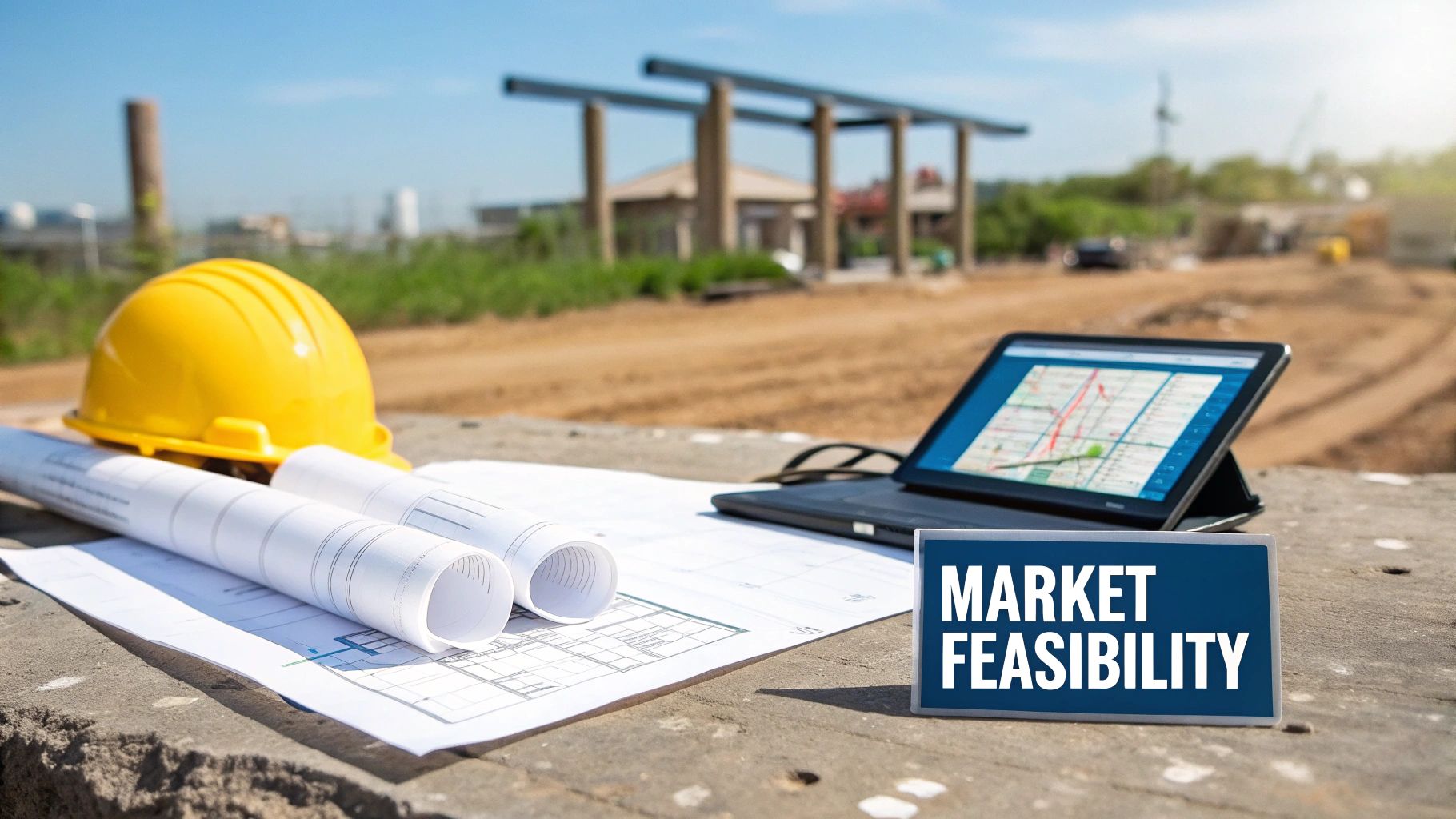
Jumping into a self-storage development is more than just putting up a building; it's a calculated investment in a booming market. To get started, you need a solid grasp of the entire commercial real estate development process to lay the groundwork for your venture. This is the phase where you back up your gut feeling with hard data.
Think of it like planning a cross-country road trip. You wouldn't just jump in the car and hope for the best. You'd need a map, a destination, and a clear idea of the road conditions ahead. The feasibility study is your project's roadmap, providing a detailed analysis that confirms whether your proposed facility isn't just viable, but genuinely profitable.
Conducting a Robust Feasibility Study
A thorough feasibility study is your first line of defence against expensive mistakes. It’s a deep dive into the critical factors that will determine your site's potential. This isn't just a box-ticking exercise; it’s an essential investigation that will shape every decision you make from here on out.
Here’s what your study should cover:
- Demographic Analysis: Who lives and works in the area? You need to look at population density, average income levels, and the types of housing nearby. Areas packed with renters in flats or new housing estates often signal strong demand.
- Competitor Saturation: How many other facilities are in the vicinity? Dig into their occupancy rates, what unit sizes they offer, and how they price them. A saturated market can be tough to crack, but an underserved area could be a goldmine.
- Traffic and Visibility: A successful facility has to be easy to find and get to. A spot on a high-traffic road is basically free marketing, making your location the obvious choice for potential customers.
- Zoning and Regulations: Before you get too attached to a location, check that the land is zoned for commercial or industrial use. Getting a handle on local planning permissions early can save you from major headaches and delays down the line.
A well-executed feasibility study does more than just give a location the green light. It gives you the hard data needed to build a compelling business case for lenders and investors, proving your project is built on solid ground.
Pinpointing the Ideal Site
Once your study confirms there's a real demand, the hunt for the perfect piece of land begins. The right location can make a world of difference to your occupancy rates and rental income. You're looking for that sweet spot that balances visibility, accessibility, and cost.
This diligence is absolutely critical in today's market. The UK self-storage industry is seeing strong growth in new construction, with an expected pipeline of up to 82 new sites on the horizon—a clear sign of investor confidence. This boom, fuelled by increasing urbanisation and smaller living spaces, makes strategic site selection more vital than ever.
Ultimately, getting this foundational stage of your self storage unit construction project right ensures you’re not just putting up a building. You’re building a successful and resilient business. To learn more about turning this concept into a thriving enterprise, check out our guide on running self-storage as a business.
Navigating UK Building Codes and Safety Compliance
Think of regulatory compliance as the invisible shield protecting your investment, your staff, and your customers' belongings. Getting it right is the foundation of any safe, legal, and insurable self-storage facility in the UK. Mastering these legal and safety standards isn’t just a box-ticking exercise; it’s a non-negotiable part of the process for any serious developer.
Successfully navigating this landscape means weaving UK Building Regulations and planning permissions directly into your initial designs. Getting this right from day one is the surest way to prevent expensive retrofits, sidestep frustrating project delays, and keep your construction timeline on track.
Understanding Core Fire Safety Requirements
Fire safety engineering is, without a doubt, the most critical piece of the compliance puzzle. When you have a building filled with countless unknown items, you absolutely cannot compromise on robust fire prevention and containment strategies.
A solid fire strategy is a system where every part works together. Key elements include:
- Fire-Rated Partitioning: The walls separating units and lining corridors must have a specific fire-resistance rating, usually 30 or 60 minutes. This is designed to contain a fire at its source and stop it from spreading like wildfire.
- Strategic Detection: You need smoke and heat detectors placed intelligently throughout the facility, especially in corridors and common areas. These must be linked to a central alarm system to give everyone the earliest possible warning.
- Clear Escape Routes: All emergency exits and escape routes have to be clearly marked, well-lit, and kept completely clear of obstructions. The goal is to allow for a fast and straightforward evacuation.
These three elements are an integrated safety net. The partitions slow the fire, the detectors sound the alarm, and the escape routes get people out. To get into the finer details, our comprehensive guide on UK building regulations is an excellent resource.
Beyond Fire Safety Essential Compliance Checks
While fire safety rightly gets a lot of attention, it’s just one part of a much larger compliance picture. To get your plans approved and ensure your facility stands the test of time, you need to account for several other critical standards.
A common mistake is treating compliance as an afterthought. Integrating these requirements from the earliest design phase is the most cost-effective way to build a secure and legally sound facility. It ensures safety is built in, not bolted on later.
You’ll need to tick off several other key areas. For instance, ensuring every door meets strict safety protocols is vital; for a deeper dive, it's worth consulting a guide on fire rated door safety, compliance, and liability.
Accessibility regulations are also crucial. They ensure your facility can be used safely by everyone, including people with disabilities. This covers everything from ramp access to the width of corridors and the design of doorways.
Finally, structural integrity is the bedrock of it all. Every component, especially load-bearing elements like mezzanine floors, must be professionally engineered and certified to handle its intended weight. Proper ventilation is also a must-have to manage air quality and prevent damp, which protects both the building fabric and the goods stored inside.
Here’s a quick checklist to keep these key areas front of mind:
Key Compliance Checklist for Self Storage Construction
This table summarises the critical regulatory and safety checks you'll need to address during the planning and construction of your self-storage facility.
| Compliance Area | Key Consideration | Why It Matters |
|---|---|---|
| Fire Safety | Fire-rated partitioning, smoke detectors, clear escape routes, sprinkler systems. | Protects lives, contains damage, and is a non-negotiable legal requirement. |
| Structural Integrity | Load-bearing capacity of floors (especially mezzanines), material certifications. | Prevents structural failure, ensuring the safety of people and stored goods. |
| Accessibility | Ramp access, corridor widths, accessible doors, and lift provisions. | Ensures the facility is usable by everyone, including those with disabilities, as required by law. |
| Doors & Security | Fire-rated doors, secure locking mechanisms, emergency exit compliance. | Secures customer belongings while ensuring safe egress during an emergency. |
| Ventilation | Air quality control, moisture prevention, adherence to ventilation codes. | Protects stored items from damage due to damp or poor air quality and maintains a healthy environment. |
Sticking to these multifaceted regulations ensures your facility isn't just profitable but also stands as a trusted and secure asset for the community it serves.
Designing for Maximum Rentable Space and ROI
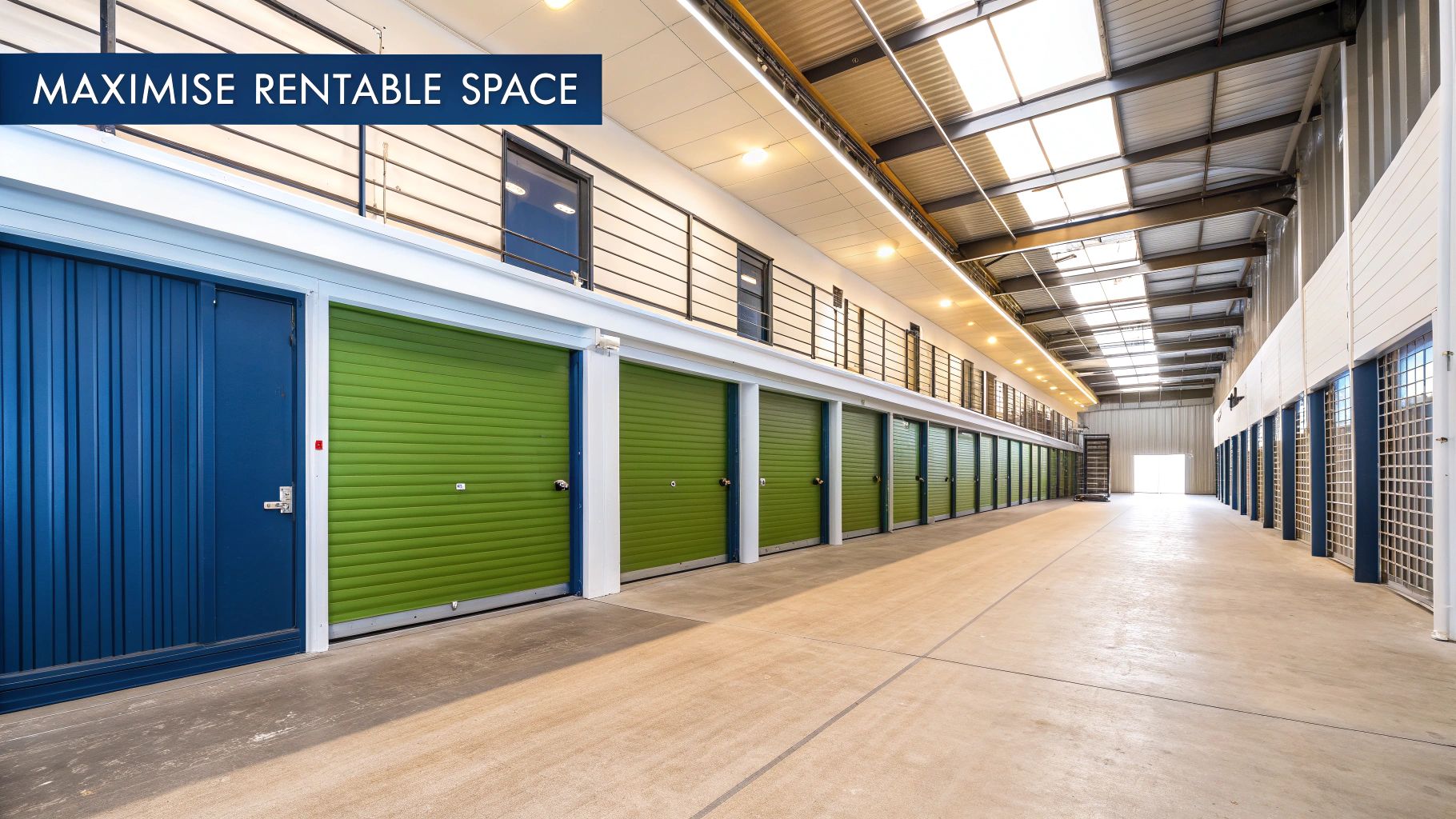
The physical layout of your self-storage facility is the engine that drives its profitability. Every single decision, from the width of a corridor to the size of a unit, directly shapes your rentable square footage and, ultimately, your return on investment. A smart design isn’t just about cramming in as many units as possible; it’s a strategic science that perfectly balances what customers need with how you can maximise revenue.
This careful planning has never been more important. The UK market is expanding at a blistering pace, with available self-storage space growing by 7.2% last year alone to hit 64.3 million square feet. With the industry now generating £1.2 billion annually and rental yields climbing, a thoughtfully designed new build is primed for serious returns. You can dive deeper into these figures in the latest UK self-storage annual report.
Crafting the Perfect Unit Mix
Think of your unit mix like a diverse investment portfolio. You wouldn't put all your money into one stock, and you shouldn't rely on a single unit size. Doing so ignores the simple fact that your customers have vastly different needs. A successful facility offers a carefully calculated blend of options to capture the widest possible market share.
The goal is to create a layout that works for everyone. You need to cater to the student who just needs a small locker for a few boxes and the growing business that requires a large, garage-sized space.
An effective unit mix will almost always include:
- Small Lockers (e.g., 10-25 sq ft): These are perfect for students, city dwellers in small flats, or anyone stashing seasonal items. They come with a low price point but deliver a high price per square foot.
- Medium Units (e.g., 50-100 sq ft): This is the bread and butter for most facilities. The classic 10×10 ft unit is often the most popular size, ideal for the contents of a one or two-bedroom flat.
- Large Units (e.g., 150-300 sq ft): These attract your high-value commercial clients, families in the middle of a house move, or people storing vehicles. They generate higher total revenue per unit.
The real secret to a profitable unit mix is aligning it with local demographics. A facility near a university should lean heavily on smaller lockers. One in a suburban area with larger family homes, on the other hand, will see far more demand for 10×15 ft and 10×20 ft units.
Doubling Your Space with Mezzanine Floors
What if you could double your rentable area without increasing your building’s footprint? That’s the power of a mezzanine floor. For warehouses or industrial buildings blessed with high ceilings, installing a mezzanine is the single most effective way to skyrocket your ROI.
It’s like adding a second storey of pure, leasable income. This approach brilliantly transforms vertical, unused air into rows of revenue-generating units. This kind of vertical expansion is a cornerstone of modern self storage unit construction, letting developers achieve much higher density and profitability from the exact same site.
By using this technique, you can dramatically increase the number of units on offer, all while your foundational costs stay the same. To fully grasp the potential here, it’s worth learning more about professionally engineered commercial mezzanine floors.
Optimising Corridors and Flow
While the units themselves generate direct income, the spaces in between play a huge supporting role. Inefficient corridors are just wasted, unrentable space that quietly eats into your profits. The trick is to design hallways that are wide enough for customers to easily manoeuvre trolleys, but not so wide that they consume valuable square footage.
Modern design also focuses on creating a positive customer experience—one that justifies premium rental rates.
Think about these design elements:
- Smart Lighting: Motion-activated LED lighting in corridors and individual units slashes energy costs while making the facility feel safe, bright, and modern.
- Clear Signage: Nobody likes getting lost. Intuitive wayfinding helps customers navigate the facility with ease, reducing frustration and improving their overall impression of your business.
- Efficient Flow: The layout should guide customers logically from the entrance right to their unit. Lifts and loading bays need to be strategically placed to minimise those long, frustrating walks.
By combining an intelligent unit mix, vertical expansion with mezzanines, and thoughtful corridor design, you create a facility that isn’t just a building. It's a highly optimised asset, engineered from the ground up for maximum profitability.
Choosing the Right Construction Materials and Methods
Once the blueprints are finalised, it’s time to get down to the nuts and bolts of your self-storage facility. The construction materials and methods you choose now are the bedrock of your business’s long-term success, directly influencing everything from durability and security to maintenance costs and what customers are willing to pay.
This is all about striking the right balance between your initial investment and long-term performance. Spending a bit more on high-quality, durable materials now will save you a fortune on repair bills down the line. More importantly, it creates a premium feel that justifies higher rental rates. Cutting corners, on the other hand, can lead to security nightmares, weather damage, and a facility that quickly looks tired and uninviting.
Selecting the Ideal Partitioning System
The partitioning system is essentially the skeleton of your facility’s interior. It defines your unit mix and serves as the first line of defence for your customers' belongings. Your two main options are traditional stud and drywall or modern steel panel systems. While both get the job done, steel has rightly become the industry standard.
Traditional construction methods can be slow, messy, and labour-intensive, kicking up dust and debris that delays everything else. Modular steel partitioning systems, however, are a different story entirely.
- Speed of Installation: Steel components are prefabricated in a factory and arrive on-site ready to be bolted together. This dramatically slashes construction time.
- Durability and Security: Let’s be honest, steel is far tougher than drywall. It stands up better to impacts, pests, and moisture, offering superior protection and a much longer lifespan.
- Cleanliness and Flexibility: The installation process is clean and quick. Plus, the modular design makes it surprisingly easy to reconfigure your unit mix if you find market demand is shifting.
Choosing your partitioning system is a huge decision. While steel systems might seem to have a higher upfront material cost, the savings you'll make in labour, the accelerated project timeline, and the drastically reduced long-term maintenance almost always deliver a far better return on your investment.
The Rise of Modular and Prefabricated Construction
In property development, speed to market is everything. The faster your doors open, the sooner the rent starts rolling in. This is where modular and prefabricated construction methods really come into their own, giving you a powerful way to shrink project timelines without cutting corners on quality.
The approach is simple: major components—like wall panels, door systems, and even entire external units—are built in a controlled factory setting. These finished pieces are then shipped to your site for rapid assembly. Think of it like building with high-tech, industrial-grade LEGO bricks. This method avoids the classic British weather delays and ensures a level of quality control that’s tough to replicate on a muddy, active building site.
Essential Components for a Premium Facility
A top-tier facility is so much more than just walls and doors. A few other material choices are absolutely critical for creating a secure, user-friendly environment that can command premium rental prices. Smart investments here are what separate the best from the rest.
Don’t overlook these critical elements:
- High-Traffic Flooring: Your corridors will see constant footfall, with customers dragging and dropping heavy items. You need a floor that can take a beating. A sealed concrete floor or an industrial-grade epoxy coating is essential to resist wear, prevent dust, and make cleaning a breeze.
- Secure Locking Mechanisms: While customers bring their own padlocks, the door latch and hasp need to be bombproof. High-quality steel latches that are visibly tough and difficult to tamper with are a non-negotiable security feature.
- Efficient Climate Control Systems: In the UK’s damp climate, offering climate-controlled units is a major differentiator. A reliable HVAC system protects sensitive items from mould, mildew, and temperature swings, allowing you to charge significantly higher rates. Investing in an energy-efficient system from the start will also keep your running costs in check for years to come.
Managing Project Timelines and Construction Costs
In property development, time really is money. Every single day shaved off your construction schedule is another day you start earning rental income, getting you to your return on investment that much faster. Managing the self storage unit construction timeline and budget isn’t about cutting corners; it’s about making smart, strategic moves to head off costly delays and budget blowouts.
It all starts with a solid understanding of the project lifecycle, from the moment you break ground to the day your first customer walks in. By spotting the common bottlenecks early on, you can build a realistic schedule and get ahead of potential risks. A well-run project is one with no surprises—just planned, steady progress.
Breaking Down the Construction Timeline
A typical self-storage build, from start to finish, can take anywhere from six to twelve months. This window can shift quite a bit depending on the project's scale, complexity, and other variables like the weather, council inspections, and the sheer efficiency of your contractors.
The main construction phases usually follow a predictable path:
- Site Preparation (1-2 months): This is where the groundwork happens—literally. The land is cleared, graded for proper drainage, and essential utilities like water, sewer, and electricity are brought in. Nasty surprises like poor soil conditions or buried obstacles can cause delays right out of the gate.
- Foundation and Structural Work (2-4 months): With the site prepped, the concrete slab is poured and the building's primary steel framework goes up. This is the exciting part where your facility really starts to take shape.
- Exterior and Interior Fit-Out (3-6 months): This is often the longest phase. It covers everything from roofing, wall panels, and doors to installing all the interior partitions. At the same time, the electricians, plumbers, and HVAC teams get to work.
Once the main structure is watertight, the focus shifts to the internal components, which have their own sequence.
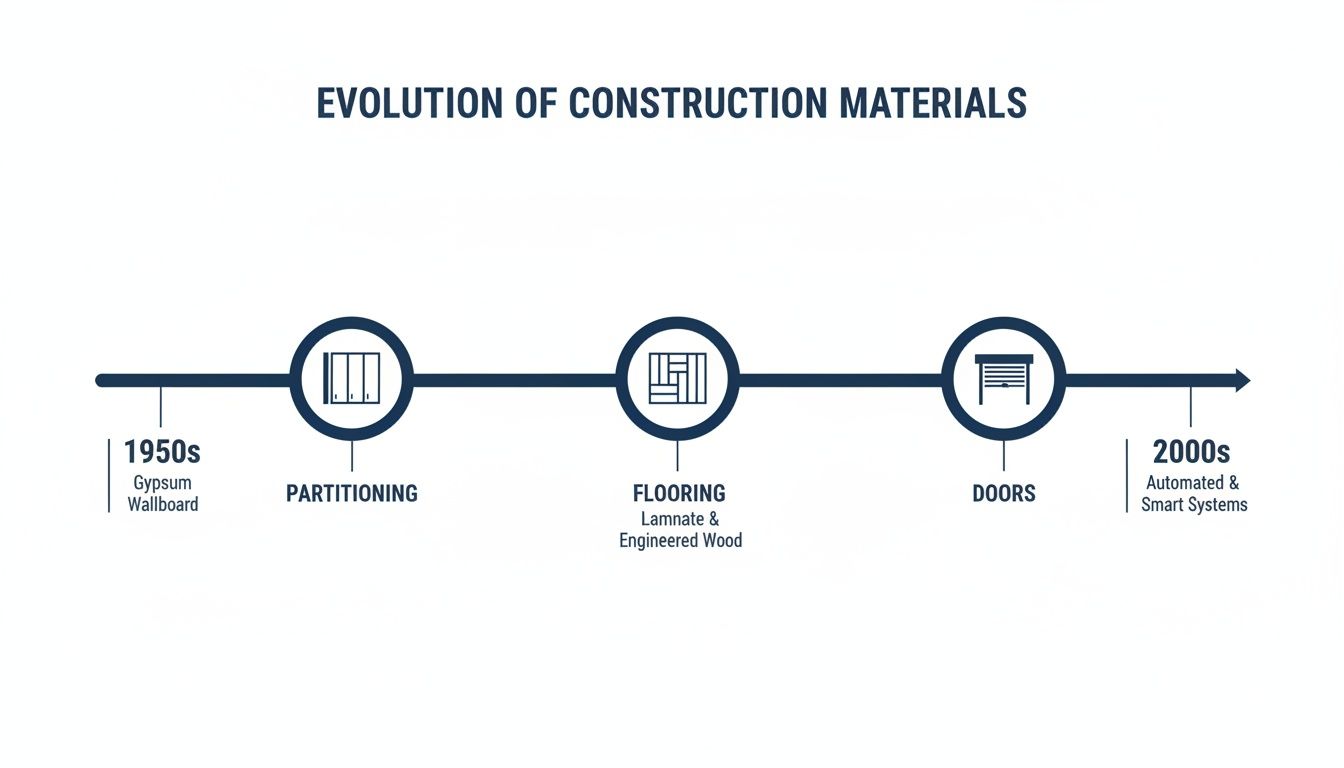
As you can see, the key interior elements—partitions, flooring, and doors—are installed one after the other. A holdup at one stage creates a domino effect, pushing back everything that follows.
Implementing Effective Cost Management
Keeping a firm grip on your budget is just as crucial as managing the clock. The biggest ticket items in any self-storage project are almost always land acquisition, materials, and labour. While the land cost is pretty much fixed, you have a surprising amount of control over the other two.
The single most effective way to manage construction costs is to finalise your design and material choices before a single spade hits the ground. Mid-project changes are the number one cause of budget overruns and delays, creating a costly ripple effect that disrupts the entire build.
Here are a few practical strategies for keeping your costs firmly in check:
- Get Multiple Bids: Don't just go with the first quote you get. Make sure you receive detailed bids from at least three reputable contractors for every major part of the project.
- Embrace Value Engineering: Sit down with your design team and look for smart savings that don’t sacrifice quality. This could be something as simple as choosing a different—but equally durable—gauge of steel or opting for a more cost-effective lighting system.
- Watch Material Prices: The price of steel and other commodities can swing wildly. Lock in prices with your suppliers early to shield your budget from market volatility.
The Advantage of a Turnkey Solution
For many developers, especially those new to the self-storage game, juggling all the moving parts of a construction project can feel overwhelming. This is exactly where a turnkey provider like PSL comes in. A turnkey solution brings design, manufacturing, and installation all under one roof, with a single point of contact.
This integrated approach gives you far greater cost certainty from day one. Because one company manages the entire process—from the initial sketches to the final installation—they can create a highly efficient workflow. Their in-house manufacturing means they control the supply chain for critical components like partitions and mezzanine floors, which cuts down the risk of third-party delays and guarantees quality. Ultimately, this streamlined process doesn't just tighten the construction timeline; it gives you a much clearer, more predictable path from capital outlay to revenue generation.
From Construction Site to Operational Business
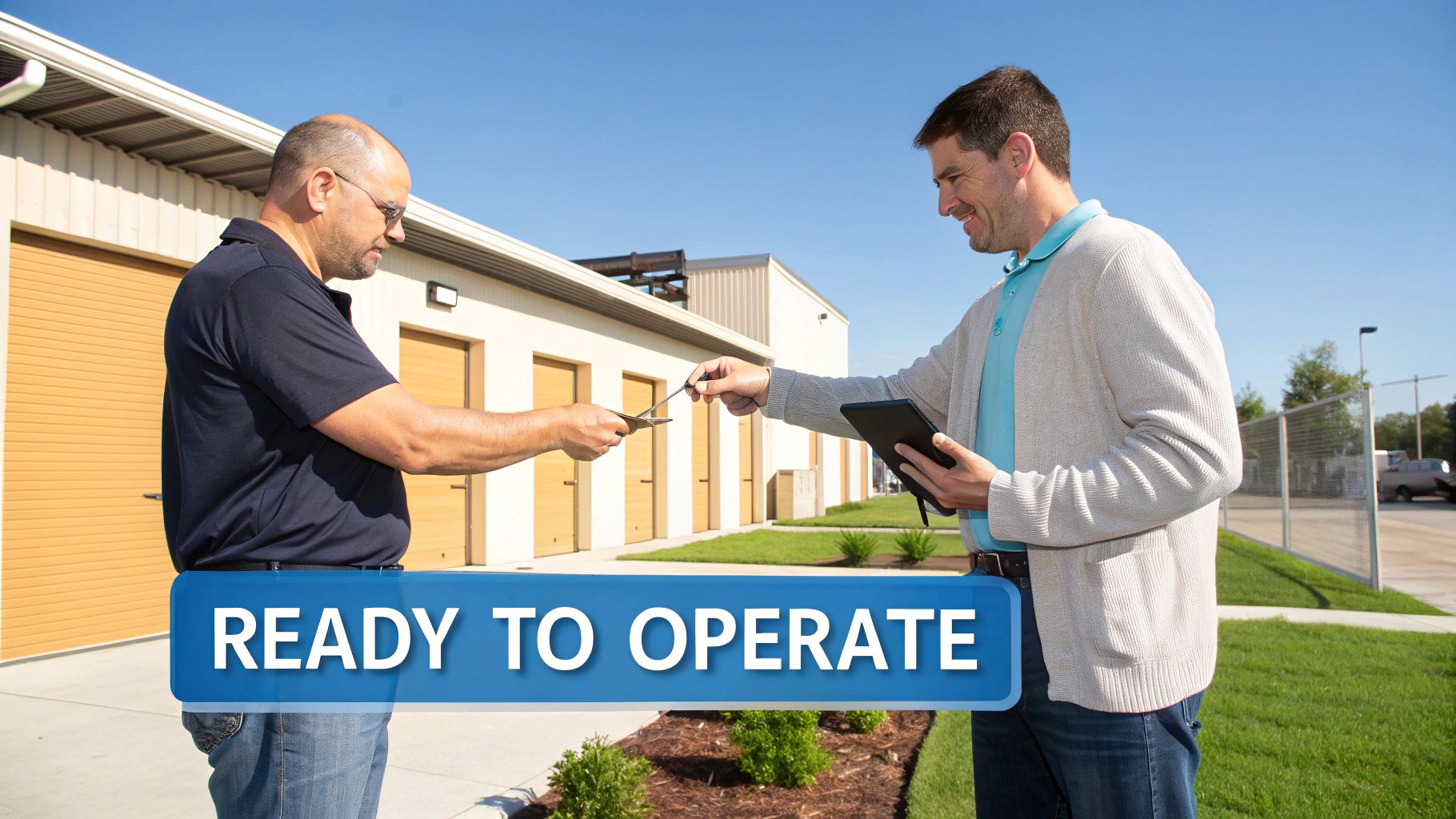
The final handover is the moment your carefully planned asset stops being a construction site and starts being a revenue-generating business. This is your last pre-launch checklist before opening the doors, a critical transition to make sure every system is primed for performance and your team is ready for that very first customer. It's where the blueprint finally becomes a living, breathing reality.
A smooth handover all comes down to rigorous final checks and system commissioning. This isn't just a quick walk-through; it's a deep dive to verify that every single component of your self storage unit construction project meets the standards you agreed on. Think of it as the final quality control gate before you go live.
The Commissioning and Handover Checklist
The whole point of commissioning is to stress-test your facility’s core systems under real-world conditions. It's your chance to catch any last-minute snags while the construction team is still on-site, saving you the headache of discovering problems after you've already opened for business.
Your commissioning process needs to cover several key areas:
- Security Systems: This means testing every CCTV camera, motion sensor, and keypad for the access control system. You have to be certain they’re all talking to the central management software correctly.
- Fire Safety Systems: A full diagnostic of the fire alarm network is non-negotiable. This involves activating smoke detectors and confirming that all alarms, emergency lighting, and fire doors work exactly as they should.
- Mechanical and Electrical: All lighting, heating, ventilation, and lift systems must be run and tested to confirm they operate efficiently and meet every regulatory requirement.
Once all systems are verified and signed off, the formal handover can happen. This is where you receive all the essential paperwork, from building certificates and system manuals to the warranties for all installed equipment.
The handover is so much more than just getting the keys. It's a structured transfer of knowledge, making sure your facility managers are fully trained on every operational system, from security protocols to maintenance schedules. It empowers them to run the site efficiently from day one.
Establishing a Long-Term Aftercare Plan
Your investment doesn't stop when the builders leave; it’s really just beginning. To protect the long-term value of your facility, you need a proactive aftercare and maintenance strategy right from the start. A reputable construction partner will provide a comprehensive aftercare package, which acts as your first line of defence against wear and tear.
A solid plan should include scheduled inspections and preventative maintenance for key components like roller doors, lifts, and fire systems. This kind of foresight not only minimises downtime and unexpected repair bills but also ensures your facility remains a safe, secure, and appealing choice for customers for years to come.
Got Questions About Self Storage Construction? We’ve Got Answers.
When you’re planning a self-storage project, you’re balancing timelines, budgets, and the long-term return on your investment. It’s only natural that questions will pop up. Here are a few of the most common ones we hear from developers, along with some straight answers.
What Is the Typical Timeframe for a Project?
This is a big one, and the honest answer is: it depends. A simple internal fit-out inside an existing building could be wrapped up in just a few weeks. Easy.
But if you’re looking at a large, multi-storey new build from the ground up, you’re realistically looking at a 12 to 24 month journey from the first drawing to the grand opening. Things like securing planning permissions, the amount of site prep needed, and the complexity of the systems you're installing all play a huge part in that timeline. One way to speed things up is to partner with a specialist who handles their own manufacturing—it can seriously accelerate the installation phase and get your facility earning revenue faster.
How Can I Maximise Rentable Area in an Existing Building?
If you have an old warehouse or industrial building with high ceilings, the single best thing you can do is install a mezzanine floor. It’s a game-changer. This one move can literally double your lettable area without changing the building’s footprint. You’re turning empty, unused vertical space into cold, hard cash.
Maximising your rentable space is a science. It’s about combining a mezzanine with a smart unit mix of various sizes and optimised corridor layouts. The goal is to make sure you’re monetising every last square metre of your asset.
When you combine a mezzanine with a clever layout, the return on investment is exceptional.
Are There Financing Options to Reduce Upfront Costs?
Absolutely. Some specialist construction partners offer structured finance packages specifically designed to ease the pressure on your project's cash flow. These deals allow the build to move forward while you defer a big chunk of the capital expenditure until after you’re up and running.
What this means is you can open your doors and start generating income much sooner. That early revenue can then be used to service the financing, which protects your initial capital and puts you on a much faster track to profitability.
Ready to build a profitable self-storage facility with a partner who understands your goals? The team at Partitioning Services Limited offers end-to-end design, manufacturing, and installation services to maximise your return on investment. Explore our solutions at https://psllimited.co.uk.